
Key Takeaways
- In addition to other tests, a diabetic eye exam checks the health of your retina, a tissue at the back of your eyes.
- Diabetic retinopathy often develops without obvious symptoms.
- People with diabetes usually benefit from an eye exam once a year.
- Eye pressure checks, dilation, and retinal imaging help your eye doctor spot small changes.
- November is Diabetes Awareness Month, and Thyroid Eye Disease Week runs November 9 to 15, 2026.
Eye Exams Help Protect Your Vision
Diabetes can cause damage to your eyes long before you notice that there’s a problem. At MEye Health, our team uses diabetic eye exams to catch vision changes early, so that you can keep doing the things you enjoy.
A diabetic eye exam is a detailed checkup that looks at your retina, blood vessels, and eye pressure to find signs of diabetic eye disease early. As your optometrist in Burlington, we can walk you through every step.
What Is a Diabetic Eye Exam?
A diabetic eye exam is an eye exam designed for people with type 1 or type 2 diabetes. This appointment pays extra attention to your retina and the blood vessels at the back of your eye in order to catch signs of changes caused by leaky blood vessels. When these tissues become damaged, a person may develop diabetic retinopathy, which is the 5th most common cause of blindness in North America.
People with diabetes are also more prone to issues like glaucoma, macular degeneration, and cataracts, so an eye exam also checks for these conditions.
Common Symptoms
While diabetic retinopathy often progresses without symptoms, signs of diabetes-related vision problems often include:
- Vision that turns blurry and then clears again.
- New floaters, flashes, or dark spots.
- Trouble seeing at night or in low light.
- Colours appearing faded.
What to Expect During Your Diabetic Eye Exam
Health History & Vision Test
Your visit starts with a chat about your diabetes, your most recent blood sugar test, and the medications you take. Next, you’ll read an eye chart to test your near and far vision.
Changes in your vision can reflect shifts in your blood sugar, so this step matters.
Eye Pressure & Dilation
A quick, painless eye pressure check allows your eye doctor to look for glaucoma.
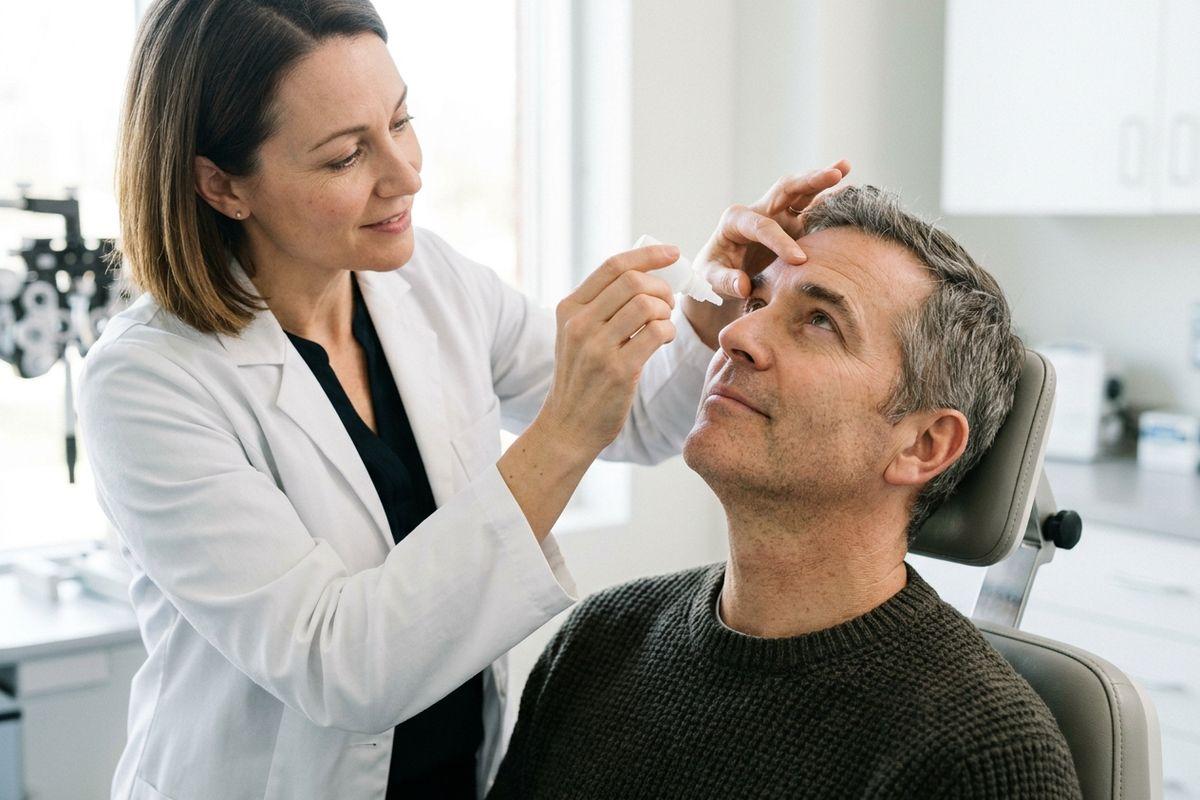
In many cases, your eye doctor will use dilation drops to get a better look at the back of your eyes. These drops widen your pupils, and they take 20 to 30 minutes to take effect. If you’re expecting dilation, bring sunglasses to your appointment and you may need a ride home, as your eyes are likely to remain sensitive to light for a few hours.
Retinal Imaging and Your Results
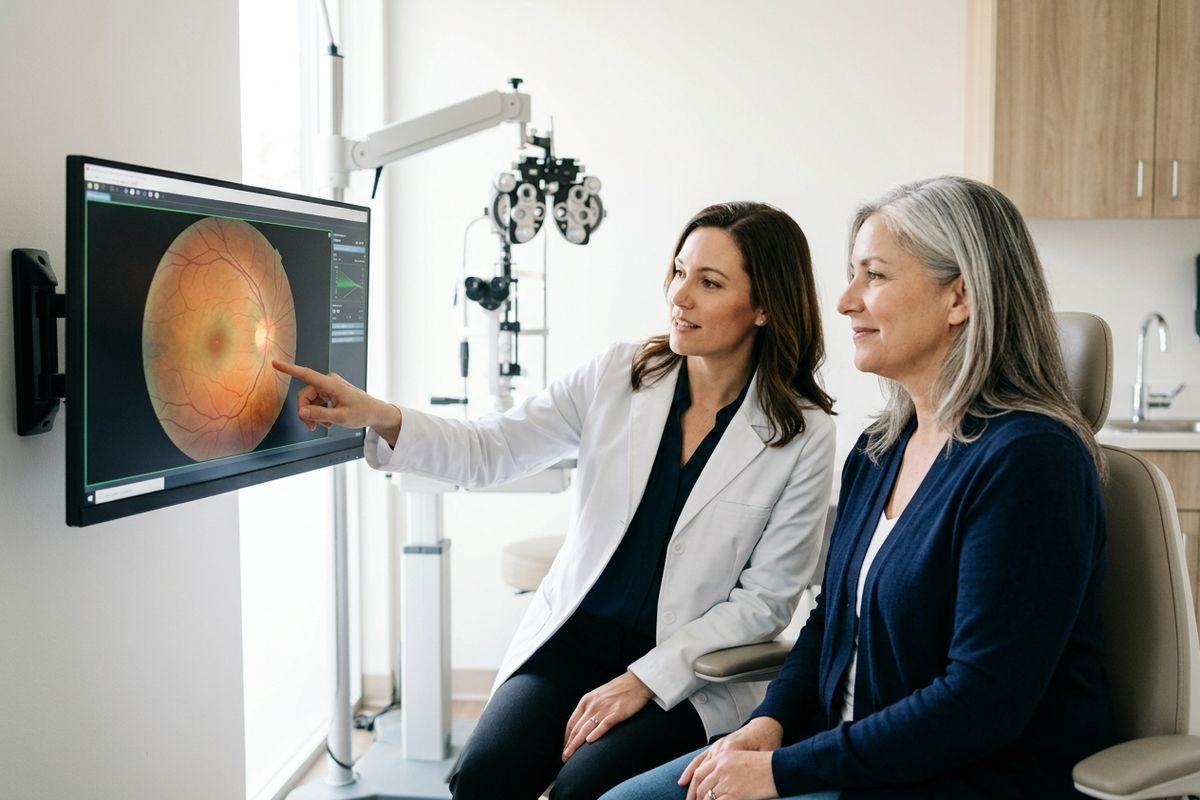
Photos and OCT scans show the back of your eye in detail. These images help track small changes from one visit to the next. Your eye doctor will review their findings, so that you can leave knowing where things stand.
How Often Should You Have a Diabetic Eye Exam?
With type 2 diabetes, your first exam happens soon after diagnosis. With type 1 diabetes, your first exam should happen within 5 years of diagnosis. After that, people with diabetes usually need an eye exam once every year.
When to Book a Visit Sooner
Contact our team right away if you notice any of these signs:
- You have sudden vision loss in 1 or both eyes.
- You see many new floaters with flashes of light.
- A dark shadow or curtain covers part of your vision.
How to Prepare for Your Visit with an Optometrist in Burlington
A little planning can make your visit smoother. Here are a few steps to take before you arrive:
- Bring your recent A1C result and medication list.
- Pack your glasses, contacts, and sunglasses.
- You may need a ride home, since dilation can blur your vision for a while.
Tips for Exam Day
Keep your regular meals and medication routine. Pack a quick snack in case your blood sugar dips, and allow 1 to 2 hours for your visit.
Protect Your Eyes Between Visits
Your daily habits support your eye health all year. Keep your blood sugar, blood pressure, and cholesterol in your target range. Take regular walks, exercise, and try to eat a healthy diet with foods like spinach or kale, the Mediterranean Diet.
If you smoke, quitting helps protect your blood vessels.
Book Your Diabetic Eye Exam in Burlington
November is Diabetes Awareness Month, and Thyroid Eye Disease Week runs from November 9 to November 15. These dates are a good reminder that yearly diabetic eye exams help you spot changes early and keep you enjoying clear, comfortable vision. Our team at MEye Health is ready to welcome you and answer your questions.
Book your eye exam at MEye Health (optometrist in Burlington) today and make this November the month you put your eyes first.