

Myopia sends plenty of people to the optometrist, though it creeps up over years rather than weeks. Kids almost never mention it. Adults blame tired eyes or bad lighting.
Nearsightedness develops when the eye grows too long from front to back, which makes light focus in front of the retina instead of directly on it. The curve of your cornea adds to the effect, and a closer look at how myopia and astigmatism overlap explains why so many prescriptions end up correcting both at once.
Once you know what’s driving it, your options open up, from everyday corrective lenses to myopia management for growing eyes.
How Myopia Changes What You See
Myopia means reading a book feels fine. Chopping vegetables or scrolling your phone stays comfortable, because your eyes focus well at short range.
Distance is where things fall apart. Faces down the block turn fuzzy, and the farther out you look, the less detail you pick up.
Where the Blur Actually Comes From
Your eye keeps growing through childhood, and sometimes it stretches longer than the focusing system accounts for. That extra length moves the focal point forward, so the image lands just short of the retina.
Corneal curvature can produce something similar. A steeper cornea bends incoming light more sharply, which shortens the focal distance.
Plenty of people have a bit of both, and your optometrist sorts out the ratio during a refraction.
Common Symptoms And Signs To Watch For
Holding distant objects in focus takes effort, and your body often complains before you notice the blurriness. Headaches show up after long stretches at a desk, and eye fatigue arrives late in the afternoon.
Signs In Adults
Adults usually piece it together once ordinary tasks demand more concentration. Watch for these:
- Street signs stay unreadable until you’re nearly past them
- Night driving feels harder than it used to
- Squinting has quietly turned into a habit
- Text on a meeting room screen runs together
Signs In Children
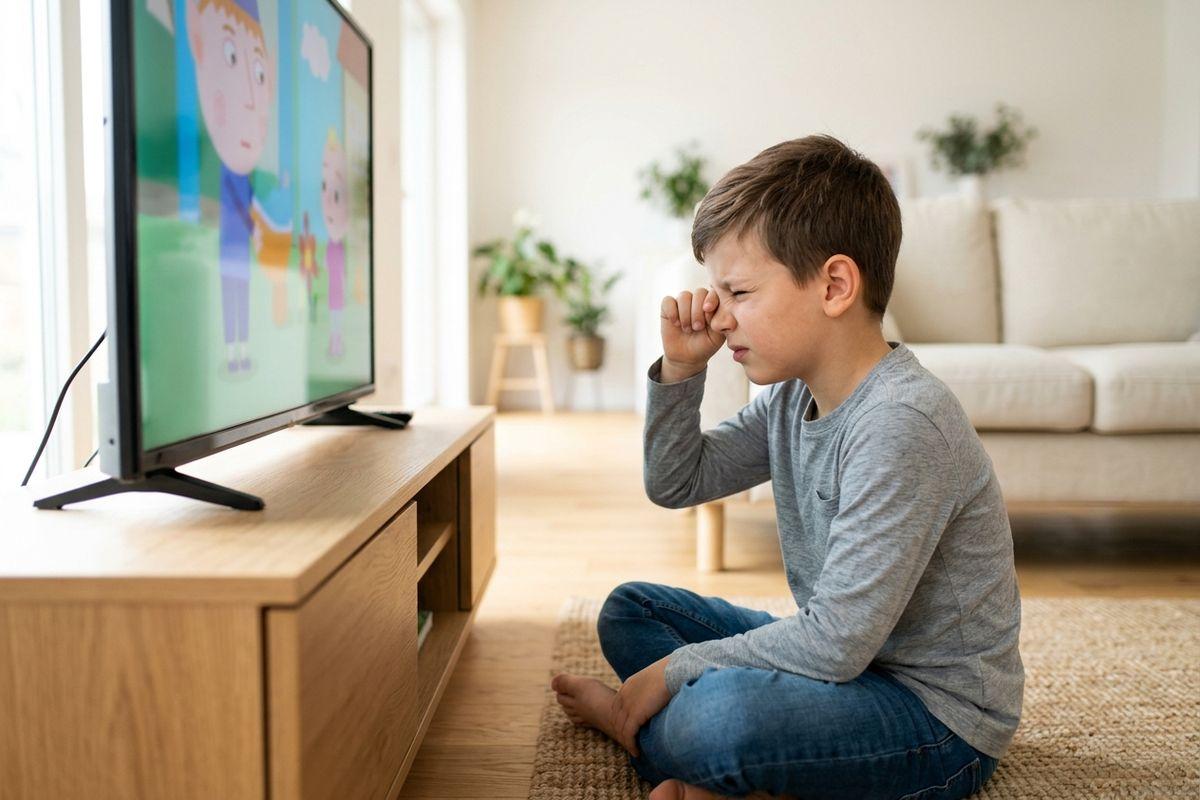
Children rarely speak up, since blurry distance vision is what they’ve always known. Their changing eyesight shows up in behaviour instead:
- Sitting a few feet from the TV
- Rubbing their eyes throughout the day
- Struggling to copy work off the whiteboard
- Losing interest in sports that rely on judging distance
- Complaining about headaches after school
Top Reasons Why Nearsightedness Develops
Family History And Genetics
Eye shape runs in families the way height does. A child with 2 nearsighted parents faces higher odds than a child with none, and the numbers climb if those prescriptions are strong.
The family pattern gives your optometrist a reason to start watching earlier, which opens up more choices later.
Screen Time And Indoor Activities
Close work fills most of the modern day. Hours on phones and computers hold your focusing system at one short distance, and that steady demand appears to influence how a young eye grows.
Time outside seems to work the other way. Bright light and long sightlines let the focusing muscles relax, and researchers connect roughly 2 hours of daily outdoor time with slower progression in children.
Send the kids outside after school when you can, and try the 20-20-20 habit yourself: every 20 minutes, look 20 feet away for 20 seconds.
When Nearsightedness Usually Starts
Most cases begin between ages 6 and 12, right as kids hit a stretch of quick growth. The eye lengthens along with everything else.
Prescriptions often change year to year through the teens before settling in the early 20s. Adults can develop myopia later, usually after long stretches of intensive close work.
How Optometrists Track Eye Growth
Measuring axial length gives your optometrist a hard number to work with. The scan records the distance from the front of the eye to the back, down to fractions of a millimetre.
Repeat it each year and a pattern emerges. Growth that outpaces what’s expected for a child’s age can prompt a conversation about management options early.
The Value Of Early Checkups
Book a yearly exam with an optometrist at MEye Health, and small changes can get spotted early. A child struggling with the board may go a full term without saying a word.
Adults come out ahead too. Correcting distance vision can ease end-of-day headaches and make evening driving less draining.
Helpful Options To Correct Your Vision
Glasses do the job simply, bending light so it lands where it should. Frames also give you somewhere to add coatings for glare or screen comfort.
Contact lenses sit right on the eye and open up your peripheral view, which suits sports and busy days. Certain specialty designs may also help slow how quickly a child’s prescription changes.
Ask your optometrist which route fits your routine and budget. The answer usually comes down to how you spend your day.
Long Term Vision Management
Vision management focuses on supporting your eye health and keeping your eyes comfortable as you grow. Myopia responds well to attention. Start tracking it early and you keep more options open, whether the prescription is yours or your kid’s.
Bring your questions to the team at MEye Health and ask what management approaches make sense for your family. Book an appointment and get a clear picture of what’s happening behind that fuzzy view.