
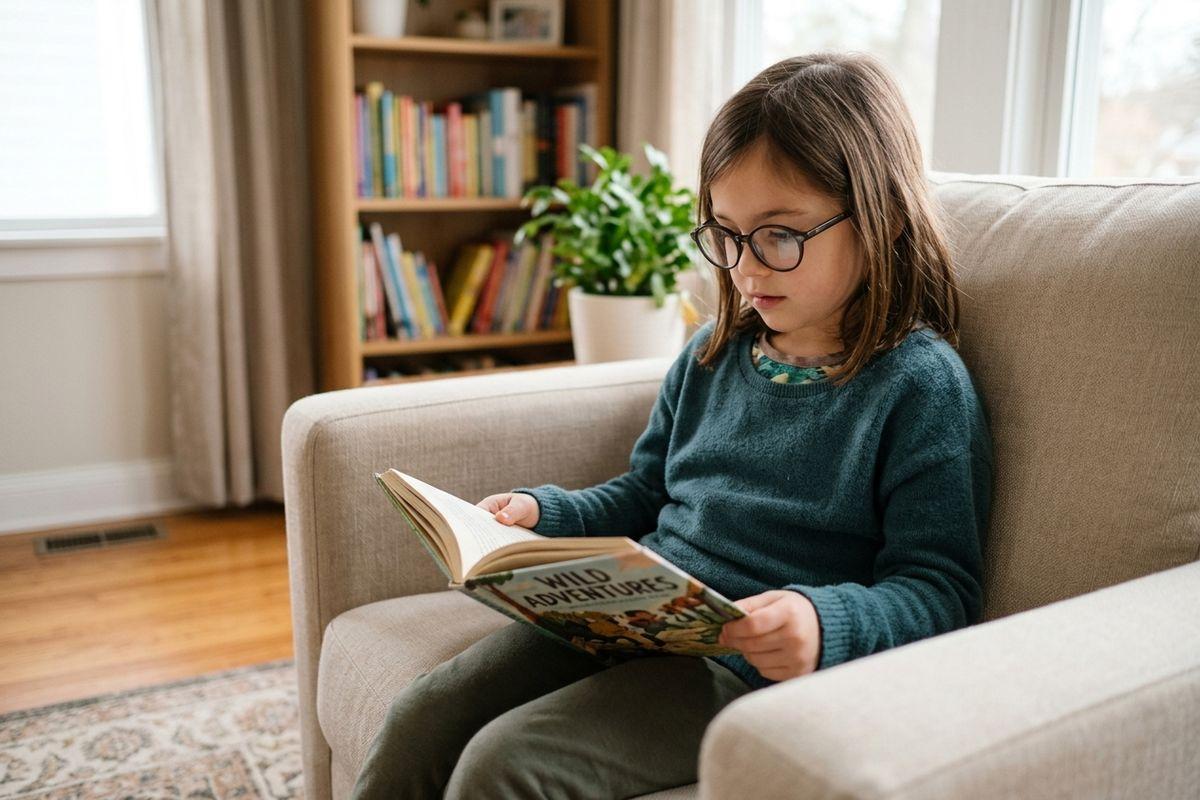
Plenty of people need glasses to read a street sign or see a whiteboard clearly. Nearsightedness is that common. Once a prescription passes a certain strength, though, the conversation moves from blurry distance vision to the health of the eye itself.
High myopia describes a prescription of -6.00 dioptres or stronger, and it matters because the eye has grown longer than average, which stretches the tissue inside and raises the odds of eye disease later in life. Knowing where you or your child sits on that scale helps you plan ahead. It also opens the door to lenses that can slow a prescription’s climb before it reaches that range.
What High Myopia Means for You
A myopic eye measures slightly longer from front to back than average. Light focuses ahead of the retina rather than on it, and distance vision goes soft.
High myopia pushes that length further. The eyeball tends to stretch through childhood and adolescence, thinning the tissue at the back with every extra millimetre of growth.
Most myopia starts between the ages of 6 and 12, then slows in the early 20s. The earlier it appears, the more years it has to progress, which is why an optometrist pays close attention to a young child with a rising prescription.
Family history carries real weight here. Hours of close work and limited time outdoors also influence how quickly the numbers climb.
Common Signs and Symptoms to Watch For
You might notice several changes in how you see the world each day. Blurry vision when looking far away often makes activities like driving or watching sports difficult.
You may also experience these common signs.
- You feel a strong need to sit very close to computer screens or televisions.
- You experience frequent headaches from eye strain after reading.
- You squint often to bring objects into focus.
When to Call the Eye Doctor
Most of what high myopia does happens quietly over years. A few symptoms move fast, so book an urgent appointment if you notice any of these:
- Sudden flashes of light off to the side
- A quick jump in the number of dark spots or floaters
- A shadow or curtain drifting across part of your vision
- A missing section of your peripheral field
- Distance vision that drops off within a day or two
Eye Health Risks and Related Conditions
Your retina lines the back of the eye like wallpaper on a curved wall. Stretch the wall and the paper thins, which sets up most of the concerns tied to high myopia:
- Peripheral retinal tears, which can progress to a retinal detachment
- Glaucoma, a condition affecting the optic nerve that can alter peripheral vision
- Cataracts arriving earlier than they otherwise might
- Myopic macular degeneration, where stretching at the centre of the retina blurs fine detail
These conditions tend to develop long before you notice anything, so your optometrist measures eye pressure and examines the retina at every visit. Finding small changes early gives you more options.
Myopia Control Options Worth Asking About
Slowing progression during childhood limits how much the eye lengthens, and a shorter eye carries less risk down the road.
Myopia Control Glasses
Specialty spectacle lenses keep central vision sharp while altering how light lands on the peripheral retina. That signal can ease the eye’s drive to keep growing.
Kids wear them the way they’d wear any pair of glasses. No new routine, no learning curve.
Soft Contact Lenses
soft lenses apply the same principle with a different delivery. Daily disposables suit active kids and teens who’d rather skip frames during sports.
Precise fitting matters here. Modern clinic equipment maps the shape and length of the eye so lenses sit comfortably through a full day.
Low-Dose Atropine Drops
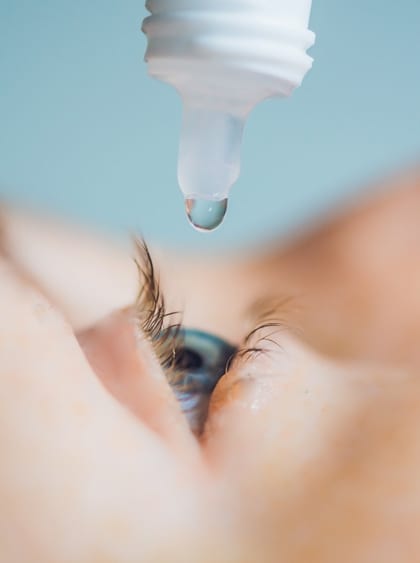
Atropine drops offer another route, usually 1 drop in each eye at bedtime. The concentration is low, and most children tolerate it well.
Optometrists often pair drops with lenses as part of a combined plan. Consistency does the heavy lifting, so build the drops into the nightly routine and keep your follow-up visits.
What Happens at Your Appointment
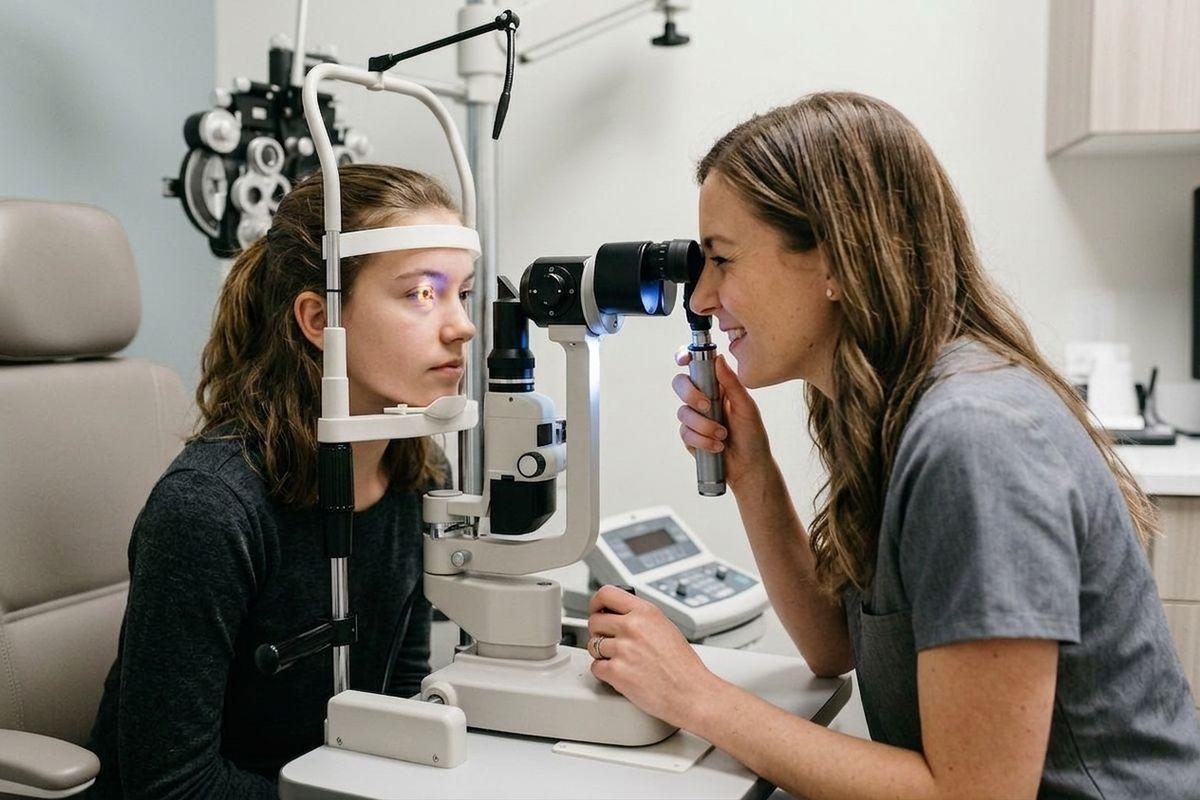
A comprehensive eye exam for high myopia goes well past reading letters on a chart. Your optometrist checks eye pressure, studies the optic nerve, measures axial length and dilates your pupils for a wide view of the retina.
Dilation drops leave your eyes light-sensitive for a few hours. Bring sunglasses and arrange a ride if you can.
From there, you’ll talk through control options against your daily routine and screen habits. Ask about follow-up timing too, since a fast-changing prescription usually calls for more frequent visits.
Habits That Help Between Visits
Small daily choices support the work happening in the exam chair. Time outdoors stands out most in the research on children.
Aim for 2 hours of outdoor light a day when the weather cooperates. Natural light appears to influence how the eye grows.
Rest your eyes every 20 minutes by looking at something across the room for 20 seconds. Good lighting for homework and reading helps as well.
Stay Ahead of a Rising Prescription
High myopia rewards attention. Regular exams track the changes that matter, and control options give kids and teens a way to slow the pace before a prescription climbs higher.
Book an exam with an optometrist at MEye Health in Burlington and ask which myopia control option fits your family. Schedule your appointment today.