
Waking up with a red, puffy, or sore eye can be unsettling. At MEye Health, we understand that the first thought is often “pink eye”, but our team wants you to know that there are other issues that can cause similar discomfort. The most common causes are conjunctivitis and styes, and because their treatments are different, it’s helpful to know how to tell them apart.
While they can feel similar, conjunctivitis (pink eye) is an inflammation of part of the surface of your eye, and a stye is a small, localized bump on your eyelid.
What Is Conjunctivitis?
You may know conjunctivitis by its common name, pink eye. It is an inflammation of a part of your eye called the conjunctiva, which is the thin, clear tissue covering the white part of your eye and lining your eyelid. When this tissue becomes inflamed, it can make your eye look pink or reddish.
Signs of Conjunctivitis
If you have conjunctivitis, you might feel a gritty or itchy sensation that spreads across your entire eye. Some common symptoms you may notice include:
- A pink or red colour in the white of your eye
- Itchiness, irritation, or a burning feeling
- Discharge that can dry into a crust overnight
- More tears than usual
- Slight swelling of your eyelids
Common Sources
Pink eye often develops from a virus, a bacterial infection, or an allergic reaction. Viral conjunctivitis often happens when you have a cold and is highly contagious. It usually starts in one eye and can spread to the other eye, causing a watery, clear discharge.
Bacterial conjunctivitis is also contagious and is known for producing a thicker, yellow or green discharge that can make your eyelids stick together. Allergic conjunctivitis is not contagious and happens when your eyes react to allergens like pollen or pet dander, leading to intense itching, redness, and watery eyes.
What Is a Stye?
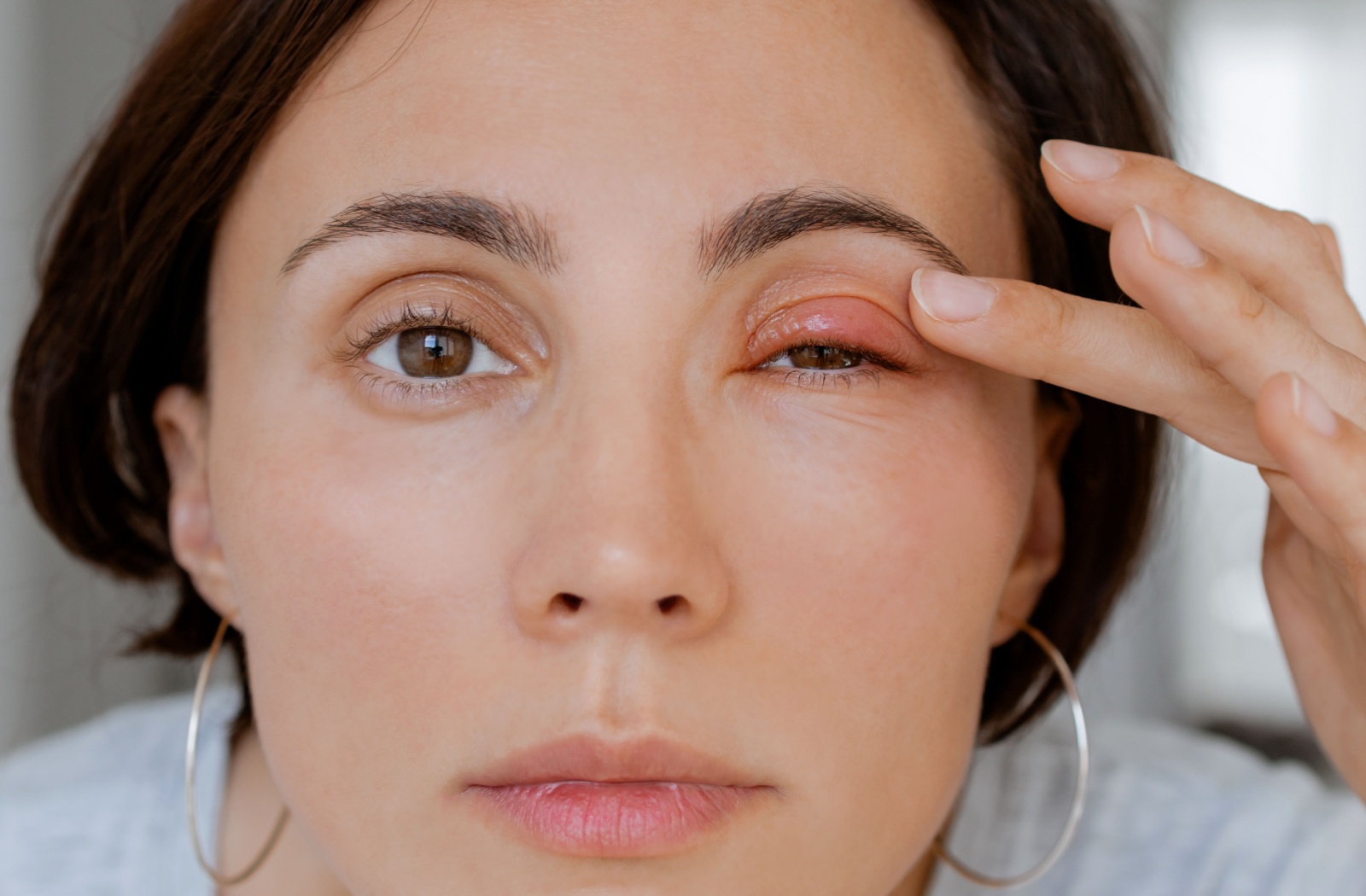
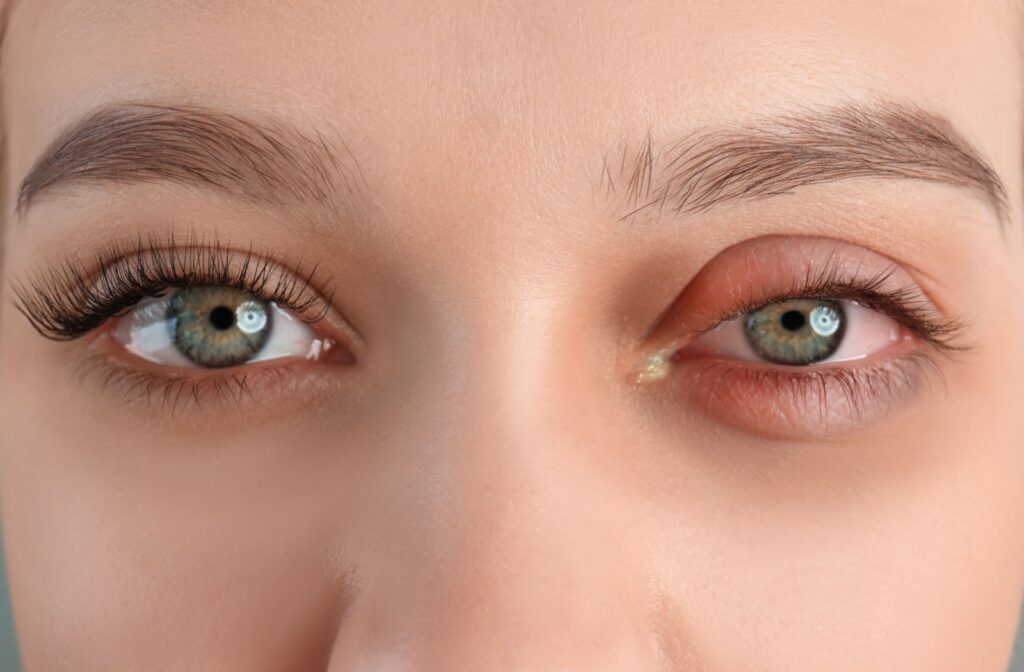
A stye is a small, tender bump that appears on the edge of an eyelid, sort of like a pimple. This can happen when an oil gland or eyelash follicle gets blocked and then infected.
Spot the Symptoms of a Stye
Unlike the widespread irritation of pink eye, a stye creates a focused spot of discomfort. You’ll probably notice:
- A painful, red lump on your eyelid, sometimes with a small spot of pus
- Swelling that is contained in one area of the eyelid
- A sensation that something is in your eye
- Watery eyes
How Do You Get a Stye?
Styes are typically the result of a bacterial infection in a single gland. These bacteria can get into your eye’s glands if you touch your eyes with unwashed hands, leave makeup on overnight, or use old cosmetics. Certain health conditions or stress can also sometimes make certain people more prone to them.
Though they can be uncomfortable, they are not usually contagious and very rarely require emergency eye care unless there is severe pain or a change in vision.
Key Differences at a Glance
When your eye is bothering you, telling these 2 conditions apart can be tricky. Here’s a quick comparison to help you see the difference.
Location and Appearance
With conjunctivitis, the entire white part of the eye often looks pink or red. With a stye, you’ll see a distinct, raised bump on the edge of your upper or lower eyelid.
Main Sensation
Conjunctivitis usually feels itchy and gritty across the whole eye. A stye, on the other hand, creates localized pain and tenderness, especially when you blink or touch the bump.
At-Home Care and Relief
For mild symptoms, a few simple steps at home can help you feel more comfortable. One of the most important things you can do for both issues is to avoid touching or rubbing your eyes, as this can worsen irritation or spread bacteria.
Tips for Conjunctivitis
You can use a clean, warm, wet cloth to gently clean away any crust from your eyelids and lashes. Make sure to wash your hands before and after touching your eyes and follow general eye safety practices at home to prevent spreading any potential infection.
Tips to Soothe a Stye
A warm compress held gently against the eyelid for 5 to 10 minutes a few times a day can encourage a stye to drain on its own. It is important not to squeeze or try to pop it, because this can spread bacteria, irritate the stye, and scar the gland .
Protect Your Eyes from Irritation
A few good habits can help keep your eyes healthy. Always wash your hands thoroughly before touching your face or eyes. It’s also a good idea not to share personal items like towels, pillowcases, or eye makeup.
If you wear contact lenses, follow your eye care team’s instructions for cleaning and replacing them. For those with allergies, try to identify and avoid your triggers, especially during high-pollen seasons.
When to See Your Optometrist
While many cases of pink eye and styes get better on their own, some situations benefit from a professional eye exam. It’s a good idea to schedule a visit with an eye doctor if:
- Your symptoms don’t improve after a few days
- You have significant eye pain or changes in your vision
- Your eye produces a lot of discharge, or tearing
- If it is your child, bring them in if you have concerns about their eye health
Schedule Your Eye Exam
Your eyesight is important to us, so if you’re dealing with persistent eye discomfort, our team at MEye Health can provide a diagnosis and a personalized plan to help your eyes feel comfortable again. Book your appointment today to get the care your eyes need.